Program Microneedling
The science behind Program Microneedling
In Program Microneedling, fine needles create controlled microchannels. Published reviews describe a staged repair response involving signalling molecules, fibroblasts and gradual extracellular-matrix remodeling, but the strength of clinical evidence varies by indication and device.

In this article
01
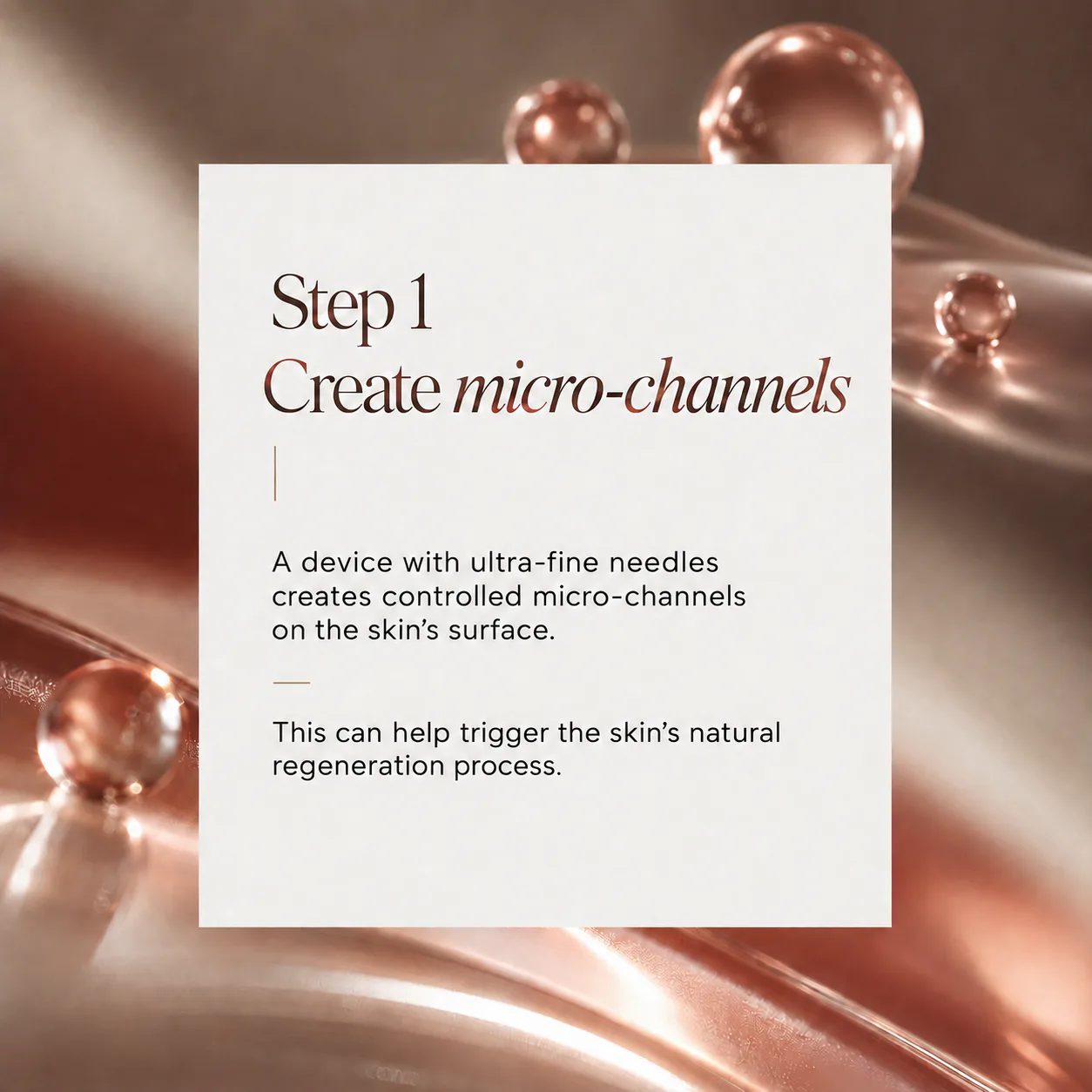
Small, controlled microchannels
The device repeatedly inserts fine needles into the skin at a depth selected by the practitioner. This creates small, controlled punctures rather than one large wound. The appropriate depth and number of passes depend on the treatment area, skin condition, device and goal; deeper is not automatically better.
02
How the local repair response starts
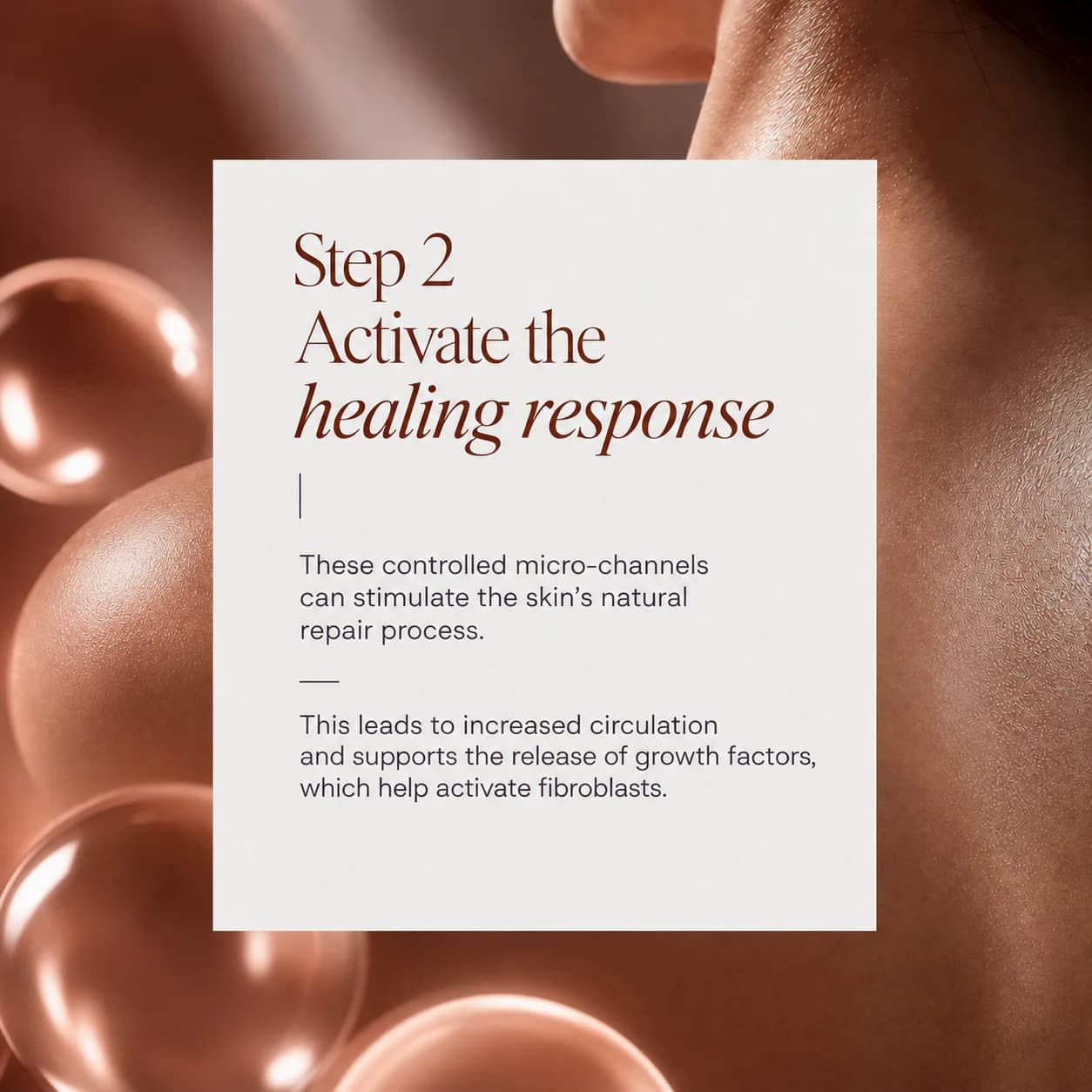
Reviews describe local signalling after these micro-injuries, including mediators and growth factors involved in tissue repair. Fibroblasts are part of this response and help produce components of the extracellular matrix. This biological explanation supports the term collagen induction, but it does not predict an individual result.
03
Collagen remodeling takes time
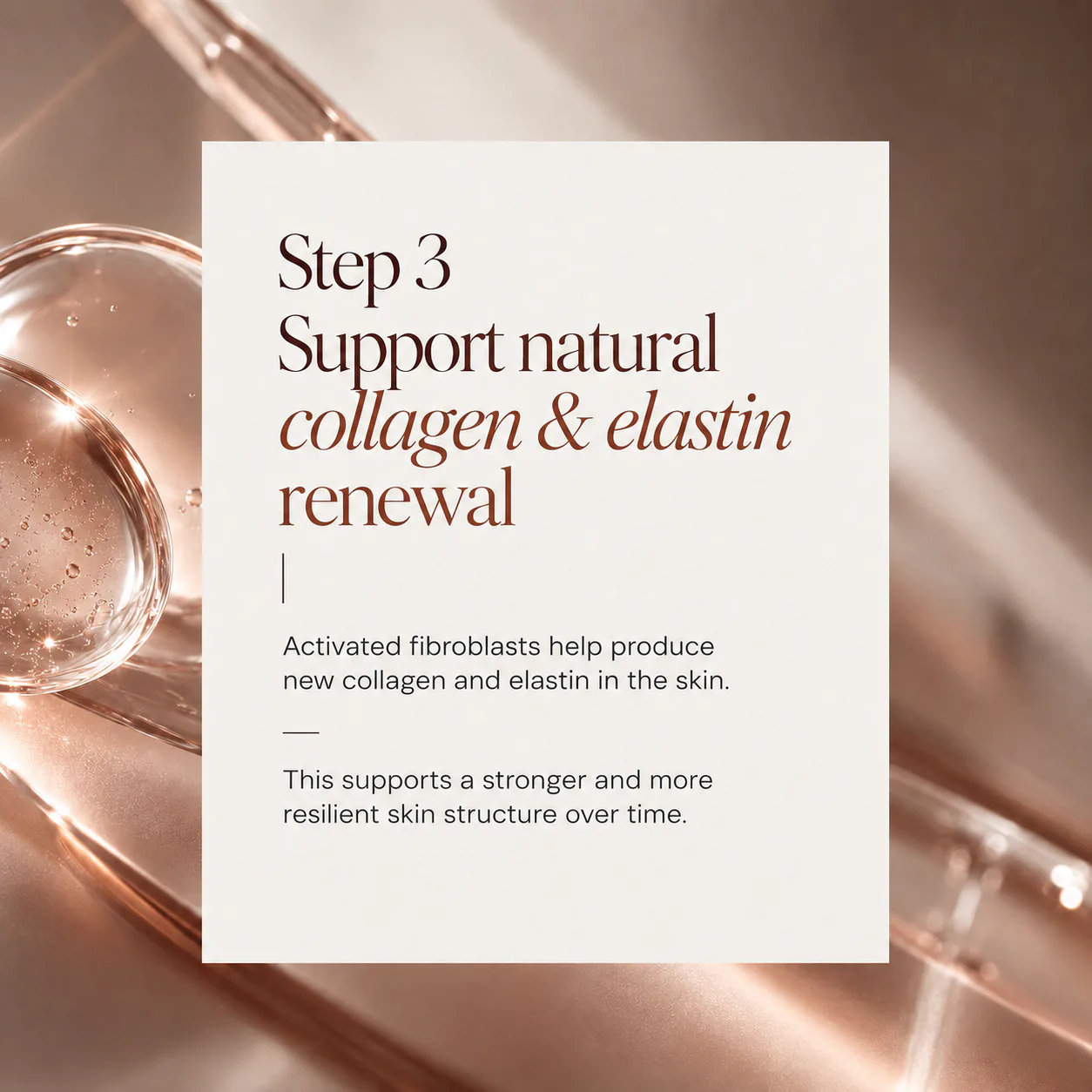
Collagen and elastin are not rebuilt overnight. Tissue formation and reorganization occur over time, so skin appearance immediately after a procedure is not a reliable measure of the eventual response. Published reviews report promising uses, especially for acne scarring, while also noting differences in study methods and the need for stronger comparative evidence.
04
Why more injury is not the goal
Needle depth, speed, passes and treatment area change both tissue exposure and risk. Creating more injury does not translate in a simple, linear way to more collagen. A trained healthcare provider should select parameters for the person and the device, and should explain cleaning, a new cartridge for every session, expected aftercare and possible complications.
05
Microneedling is not the same as RF microneedling
Conventional microneedling uses needles to create controlled channels. RF microneedling also delivers radiofrequency energy through needle-like electrodes to heat tissue. Because the mechanisms and risks differ, evidence or safety information for one should not be presented as if it automatically applies to the other.
06
Questions to discuss before treatment
Microneedling is not suitable for everyone. Discuss active skin infection or rash, a tendency to keloid scarring, clotting or immune conditions, medicines including blood thinners or isotretinoin, pregnancy or breastfeeding, allergies, pigment-change risk and your aftercare plan with a qualified healthcare provider.
07
Questions people ask about microneedling
How long does collagen take to rebuild after microneedling?
There is no single timetable that applies to everyone. Remodeling is gradual, and the visible course varies with the concern, device, settings, treatment plan and individual healing response. An immediate post-procedure appearance should not be treated as the final result.
Does deeper microneedling create more collagen?
Not in a simple linear relationship. Greater depth also reaches more living tissue and can increase bleeding, discomfort and other risks. Depth and passes should be chosen for the area, skin and treatment goal rather than maximized.
How many microneedling sessions are needed?
The number cannot be set responsibly without an assessment. It depends on the indication, baseline skin, device and response. Some people may need more than one procedure, and individual results may differ from the desired aesthetic outcome.
What are the common risks of microneedling?
Reported effects include redness, tightness, dryness, peeling, discomfort, bruising and pinpoint bleeding. Less common risks include pigment changes, cold-sore reactivation and infection. Some effects can last longer, so aftercare and access to a trained provider matter.
Can microneedling be combined with serums, PRP or other products?
Do not assume that creating channels makes every topical or injected combination safe or effective. The FDA states that it has not cleared microneedling devices for use with another product. Ask the treating healthcare provider what is being used, why, and what evidence supports that specific combination.
08Sources and evidence limitsRegulatory guidance and peer-reviewed reviews; source-discovery data was not used as medical publication authority.
U.S. Food and Drug Administration
Microneedling Devices: Getting to the Point on Benefits, Risks and Safety
Consumer Update — U.S. Food and Drug Administration
U.S. Food and Drug Administration
Microneedling Devices
Medical Devices — U.S. Food and Drug Administration
U.S. Food and Drug Administration
Potential Risks with Certain Uses of Radiofrequency Microneedling
Safety Communication — U.S. Food and Drug Administration, 15 October 2025
Jaiswal S, Jawade S.
Microneedling in Dermatology: A Comprehensive Review of Applications, Techniques, and Outcomes.
Cureus. 2024;16(9):e70033.
Ramaut L, Hoeksema H, Pirayesh A, Stillaert F, Monstrey S.
Microneedling: Where do we stand now? A systematic review of the literature.
Journal of Plastic, Reconstructive & Aesthetic Surgery. 2018;71(1):1-14.
Mujahid N, Shareef F, Maymone MBC, Vashi NA.
Microneedling as a Treatment for Acne Scarring: A Systematic Review.
Dermatologic Surgery. 2020;46(1):86-92.
Li H, Jia B, Zhang X.
Comparing the efficacy and safety of microneedling and its combination with other treatments in patients with acne scars: a network meta-analysis of randomized controlled trials.
Archives of Dermatological Research. 2024;316.